
Bespoke Fitted Furniture Styles — Shaker, Victorian, Contemporary and More
Every piece of furniture we make is built to a specific room, in a specific style, for a specific property. The style you choose determines the proportions, the door profile, the moulding detail, the hardware, and how the piece sits alongside everything else in the room.
This page covers the six styles we work in most often — Shaker, Contemporary, Victorian, Edwardian, Transitional, and Natural Timber — with notes on where each one works best and what distinguishes one from another at a construction level.
The carcass underneath every style is the same: 18mm moisture-resistant engineered board throughout, full carcass construction, spray-lacquered in our Long Hanborough workshop before it reaches your home. What changes is the door profile, the cornice, the plinth, and the finishing detail. We scribe every piece to your walls, floor, and ceiling regardless of style.
Choosing a Style for Your Property
The most useful starting point is your property, not a mood board. A style that looks right is usually one that is proportionally correct for the room it sits in — door height, rail width, cornice depth, and plinth height all need to relate to the ceiling height, the skirting boards, and the existing detail in the room.
As a rough guide: period properties with original features — cornicing, deep skirtings, chimney breasts — tend to suit Shaker, Victorian, Edwardian, or Transitional styles. New builds and open-plan extensions suit Contemporary. Renovated period homes where the original character is intact but the owners want something current rather than historical often suit Transitional best. Properties where the request centres on the material itself — the grain, the weight, the warmth of real wood — suit Natural Timber regardless of property type.
If you are not sure, we will advise you during the design visit. Most clients arrive with a shortlist of two styles; by the time we have looked at the room together, it usually narrows to one.
Shaker
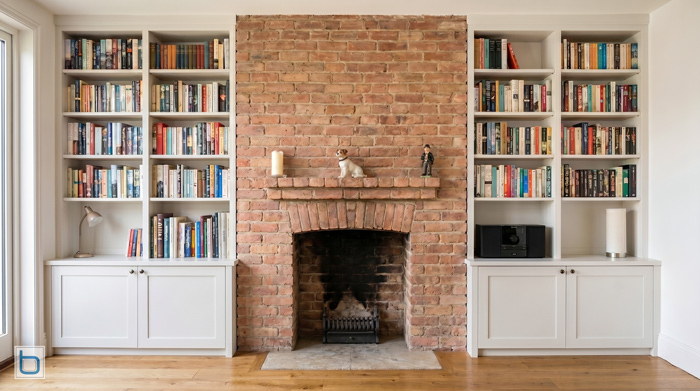
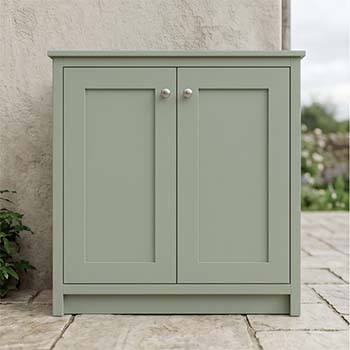
Shaker is our most requested style. The door is a flat recessed panel set within a rectangular frame — a profile that has been in continuous production for over two centuries and works in almost any room.
What defines it
The main variable is rail width — the thickness of the frame around the panel. We work in 50mm, 60mm, 70mm, 80mm, and 100mm rails. Narrower rails look lighter and more contemporary. Wider rails carry more visual weight and read as more traditional. A 50mm rail in Farrow & Ball Mole’s Breath sits comfortably in a modern extension. A 100mm rail in Hague Blue or Little Greene French Grey looks right in a Victorian or Edwardian room. Classic beading — a small applied moulding around the inside edge of the panel — adds period character to wider-rail doors without going as far as a full Victorian profile.
Shaker
Our most popular choice. This recessed-panel door hits the perfect sweet spot between traditional and contemporary style, making it versatile enough for almost any living room.
Where it works
Almost everywhere, which is why it remains our most specified style. In older rural properties and Cotswold stone houses it reads as natural and unfussy. In Victorian and Edwardian terraces it sits alongside original features without competing with them. In new builds with traditional character it adds the period warmth that contemporary profiles lack.
Common applications
Fitted wardrobes, alcove cupboards, living room furniture, home office, bookcases. The most versatile style across every room type.
Contemporary & Handleless
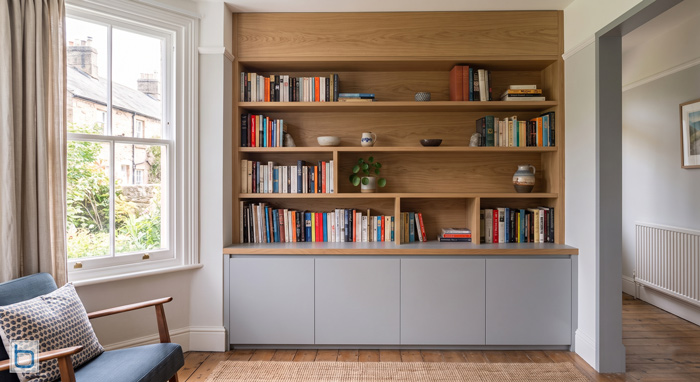
Contemporary furniture removes everything that isn’t structurally necessary. No visible frame, no handle, no applied detail. The door is a flat slab and the opening mechanism is built into the profile.
What defines it
The flat slab door sits flush with its neighbours with no frame reveal. Opening is either push-to-open — a Blum touch-latch that releases the door with light pressure — or a routed J-grip channel cut into the top or side of the door. Both remove visible hardware entirely. Finished in a supermatt lacquer — Farrow & Ball Railings, Ammonite, or any Little Greene colour — the furniture reads as part of the wall rather than furniture placed against it.
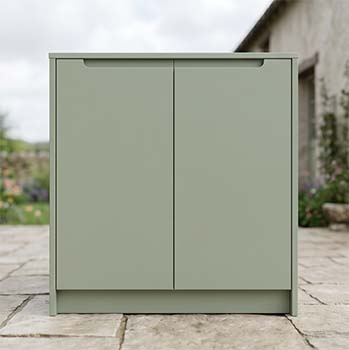
Contemporary
Flat-panel doors with no visible handle — push-to-open or routed finger pull. Clean horizontal lines. Works best in new builds and recently renovated homes.
Where it works
New builds, open-plan extensions, and recently renovated spaces where the request is clean and minimal. It works less well in rooms with original period detail — deep cornicing, elaborate skirting boards, ceiling roses — where the contrast between the flat profile and the period features is too abrupt to look right.
Common applications
Media walls and TV units, bedroom storage, fitted home office furniture. Works well in open-plan living spaces where the furniture needs to sit quietly rather than draw attention.
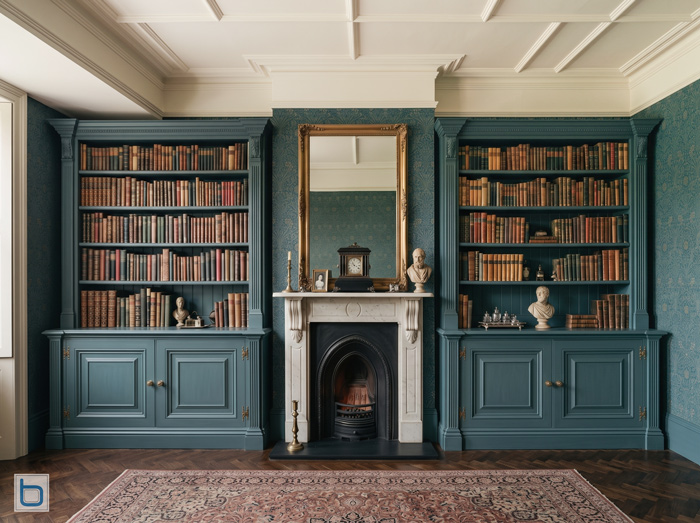
Victorian
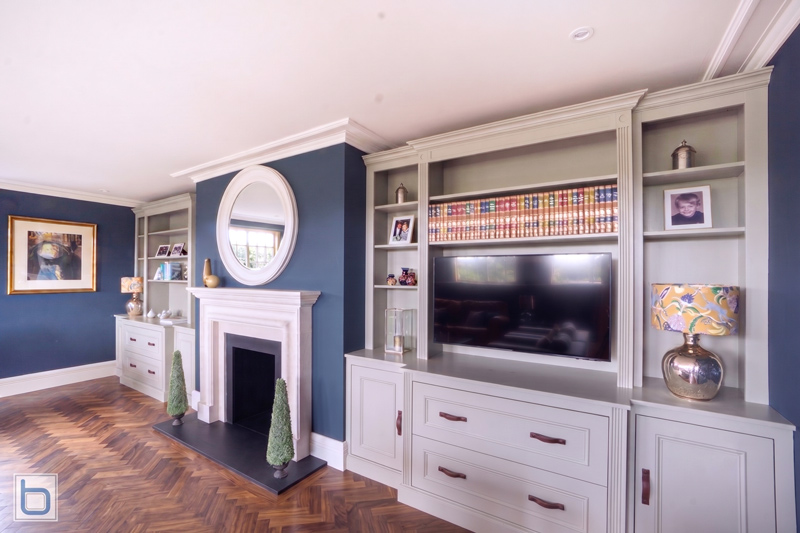
Victorian furniture is defined by applied mouldings, raised panels, ovolo beading, and deep cornicing. It is the most demanding style to execute well and the most rewarding when it works.
What defines it
Where a Shaker door has a recessed flat panel in a plain frame, a Victorian door has a raised panel with an applied moulding around its edge — typically an ovolo or ogee profile. The cornice is deeper and more detailed than any other style, and the plinth is taller and more substantial. The proportions are deliberately heavy. Scaled down, this style loses the character that makes it work. Full-height Victorian furniture in Farrow & Ball Hague Blue, Railings, or Calke Green reads as part of the room rather than furniture added to it.
Where it works
Victorian terraces, Georgian townhouses, and older Oxfordshire and Buckinghamshire properties with original cornicing, deep skirtings, and chimney breasts. In a room that already has original Victorian features, well-specified fitted furniture in this style is hard to distinguish from joinery that was always there.
Common applications
Alcove cupboards either side of a chimney breast, floor-to-ceiling fitted wardrobes, home libraries with display shelving. The most requested style for alcove work in period properties across Oxford, Woodstock, and the surrounding villages.
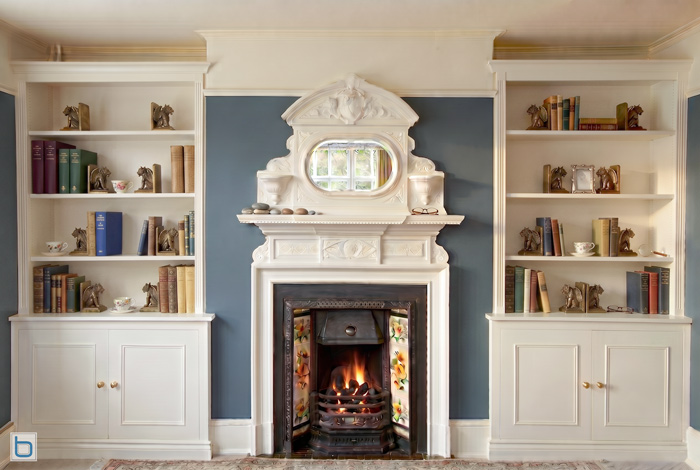
Edwardian
Edwardian style shares the raised panel door of Victorian furniture but is lighter in proportion. It also features inset panel doors with beading. Where Victorian is deliberately heavy, Edwardian is symmetrical and restrained — suited to rooms with generous ceiling heights and plenty of natural light.
What defines it
The Edwardian door has a inset or raised panel but the moulding is simpler and the frame proportions are more slender. The result is a four-panel configuration that reads as elegant rather than imposing. Cornicing is present but less elaborate. Edwardian rooms typically have taller ceilings than Victorian — 9 to 12 feet is common — and floor-to-ceiling furniture needs a cornice detail that integrates with the original ceiling mouldings rather than stopping short of them.
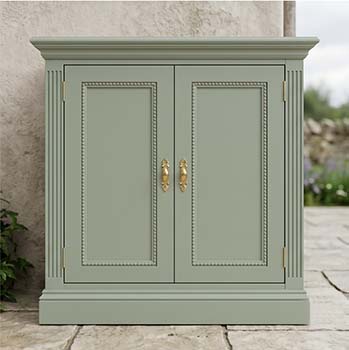
Edwardian
Timeless design rooted in classical proportions. This style features elegant beaded or raised-panel doors, refined ovolo mouldings, and intricate, detailed cornicing for a truly characterful aesthetic.
Where it works
Edwardian detached and semi-detached properties, and any room where the request is period accuracy without the full weight of Victorian ornament. Finished in lighter colours — Farrow & Ball Pigeon, Mizzle, Purbeck Stone, or Little Greene Bone — Edwardian furniture makes tall rooms feel complete without being heavy.
Common applications
Floor-to-ceiling fitted wardrobes, alcove units, dressing rooms. Popular in the Amersham, Beaconsfield, and High Wycombe areas where Edwardian housing is plentiful.
Transitional
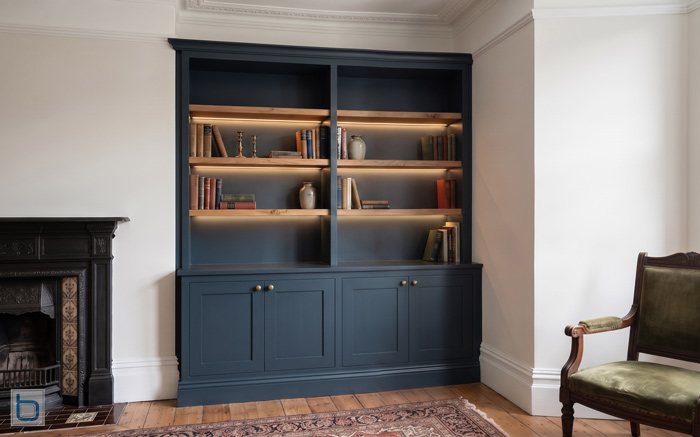
Transitional is the fastest-growing request we receive. It sits between period and contemporary — Shaker doors with more detailed cornicing and a traditional plinth, but without the heavy moulding of a full Victorian or Edwardian profile.
What defines it
The door is Shaker — recessed flat panel, rectangular frame — but the surrounding details are more developed than a standard Shaker fit. The cornice has more depth. The plinth is taller. The hardware is modern: brushed brass, matte black, or gunmetal rather than the cup pulls and knobs of a period fit. Finished in Farrow & Ball Hague Blue, Ammonite, Pointing, or Wimborne White — or any of the warmer Little Greene neutrals — the result is furniture that looks current without being tied to a particular era.
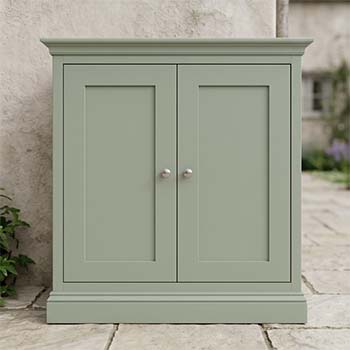
Transitional
Shaker doors with a more detailed cornice with a traditional plinth. Sits between Period and Shaker — increasingly popular in older properties that have been extended.
Where it works
Extended or renovated period homes where the original character is intact but the owners want something that looks current rather than historical. Properties from the 1920s and 1930s — good proportions and ceiling height but modest original joinery — suit this style particularly well.
Common applications
Living room furniture, home office, fitted wardrobes. Works in any room where the request is to add character without committing to a historical style.
Natural Timber & Solid Oak
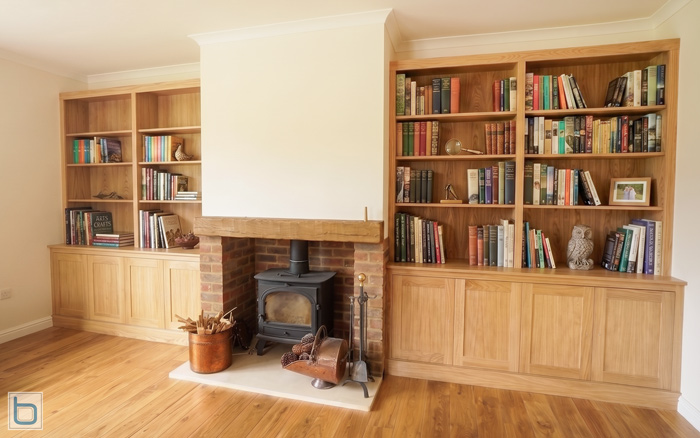
Natural timber is specified when the material itself is the point — the grain, the warmth, the weight of real wood rather than a painted surface.
What defines it
We use a combination of solid oak and oak-veneered engineered board — solid timber for doors, drawer fronts, and visible surfaces; veneered board for carcass construction where stability matters. Both get a clear workshop lacquer that protects the timber without obscuring it. The grain stays visible. The colour shifts naturally in light. Solid oak doors at 20mm thickness feel noticeably more substantial than painted engineered board equivalents — in the weight of the door, the way it moves on its hinges, and the sound it makes when it closes.
Where it works
Barn conversions, rural properties, and any room where the request centres on natural materials rather than colour. Natural timber also works alongside painted furniture — an oak shelf above painted base cupboards, or an oak worktop on a painted desk unit, adds warmth without requiring the whole piece to be in wood.
Common applications
Fitted wardrobes, alcove cupboards and shelving, bookcases. Also used for worktops and desk surfaces within painted fits, particularly in home office and living room applications.
The Difference That Matters
Many companies offer fitted furniture — selecting the best fit from their existing range of standard units and adapting them to your space with filler panels. Here is what genuinely made-to-measure looks like in practice.
Why Bespoke Beats Modular — The Real Difference
| Feature | Built In Solutions | Modular Alternative |
|---|---|---|
| Build | Full carcass construction — solid back panel, top, sides, and base on every unit | Open-backed frames or face-frame fixed to the wall |
| Materials | 18mm moisture-resistant engineered board throughout | Standard particleboard or lightweight engineered board — quality varies by brand |
| Hardware | Blum soft-close hinges and Blum Tandem drawer runners as standard | Own-brand or entry-level hardware — soft-close often an optional extra |
| Finish | Hard-wearing workshop spray lacquer in any colour, applied before installation | Hand-painted on site, or vinyl-wrapped doors in a limited range of colours |
| Scribing | Every panel hand-scribed to the exact profile of your walls, floor, and ceiling — no gaps, no filler strips | Filler panels used to bridge gaps between standard unit sizes and the wall |
| Sizing | Cut to the exact millimetre of your room — width, height, and depth as required | Fixed module widths adapted to fit with fillers; depth determined by standard carcass sizes |
| Installation | Manufactured in our Long Hanborough workshop, installed in a single day in most cases | Built and finished on site over multiple visits |
Frequently Asked Questions About Fitted Furniture Styles
How do I know which style is right for my property?
The most reliable guide is your room’s existing detail — the height of your skirting boards, the depth of any cornicing, the ceiling height, and whether there are original period features worth working with. During our design visit we will look at all of this with you and make a clear recommendation. Most clients arrive with a shortlist of two; by the end of the visit it is usually one.
Can you mix styles within the same room?
Occasionally, but rarely. The more common request is to mix elements within a style — a Shaker door with a more detailed transitional cornice, for example, or a contemporary handleless unit with a solid oak top. We will tell you honestly if a combination works and if it does not.
Do all styles cost the same?
Not exactly. Contemporary and Shaker are the most straightforward to produce. Victorian and Edwardian styles involve more applied moulding detail and deeper cornicing, which adds time in the workshop. Natural timber carries a higher material cost. The difference is rarely dramatic — the design visit gives you a fixed price for your specific request.
Can Shaker cabinetry work in a modern home?
Yes — it is one of the most specified styles in new builds and modern extensions. A narrower 50mm rail in a light neutral keeps the profile clean and contemporary without committing to a fully handleless fit. The recessed panel adds just enough depth and shadow to prevent the doors from reading as flat slabs.
What is the difference between Victorian and Edwardian styles?
Both use a raised panel door, but the proportions and detail differ. Victorian cabinetry is heavier — deeper mouldings, more elaborate cornicing, a more substantial plinth. Edwardian is lighter and more symmetrical, designed for rooms with taller ceilings and more natural light. In practical terms: if your room has elaborate original cornicing and deep skirtings, Victorian will sit more naturally. If the room is taller and the original detail is restrained, Edwardian is usually the better fit.
Can you match an existing style of joinery already in my home?
Yes. If you have original period joinery — architraves, skirtings, or existing built-in furniture — we can profile-match the moulding detail so the new piece reads as part of the same fit. Bring photographs to the design visit and we will confirm what is achievable.
Do painted styles come in any colour?
All our painted furniture is finished in a hard-wearing workshop lacquer in any colour — including the full Farrow & Ball and Little Greene ranges, Dulux, Fired Earth, or any other paint brand. For clients who prefer it, we can also apply Farrow & Ball or Little Greene’s own paint products directly.
How long does installation take once I have chosen a style?
Style does not significantly affect installation time. Most fitted furniture installations are completed in a single day. The furniture arrives at your home fully built and spray-lacquered — our team scribe and fit everything on the day. Lead time from design visit to installation is typically eight to ten weeks.
What We Make
Areas We Cover
Every piece we make starts with a design visit — we come to your home, look at the room, discuss the request, and give you a fixed price. No obligation.